
Author: Syed Ejaz Bukhari
Introduction: Why Emotional Intelligence Matters in Everyday Relationships
Every relationship experiences moments of connection, misunderstanding, frustration, and disagreement. Whether you are communicating with your partner, supporting a family member, working with a colleague, or maintaining a friendship, the way you understand and respond to emotions can significantly influence the quality of that relationship.
Sometimes, the problem is not a lack of love, care, or good intentions. It is the inability to express feelings clearly, understand another person’s perspective, or manage emotional reactions during difficult conversations.
This is where emotional intelligence becomes essential.
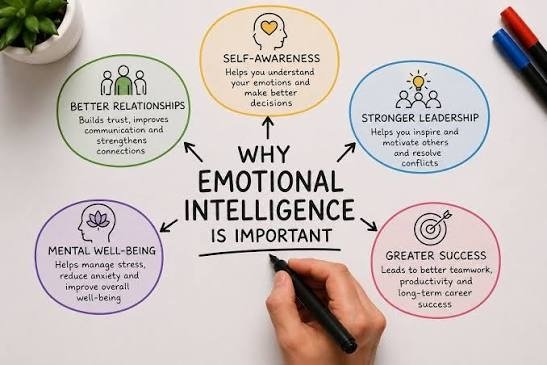
Emotional intelligence is the ability to recognize, understand, manage, and respond constructively to emotions—both your own and those of other people. It helps you communicate more thoughtfully, listen with greater attention, resolve disagreements respectfully, and build relationships based on trust and mutual understanding.
Understanding how emotional intelligence can improve everyday relationships is valuable because relationships are shaped by small, repeated interactions. A calm response instead of an angry remark, a thoughtful question instead of an accusation, or a sincere apology instead of defensiveness can make a meaningful difference over time.
From the perspective of personal development and relationship coaching, including the work and educational approach associated with Syed Ejaz Bukhari, developing emotional awareness is an important step toward building healthier communication patterns and more fulfilling relationships.
In this guide, you will discover what emotional intelligence means, why it matters in daily interactions, and how you can apply practical strategies to improve your relationships at home, at work, and in your social life.
What Is Emotional Intelligence?
Emotional intelligence (EI) is the ability to identify emotions, understand what causes them, regulate emotional responses, and respond appropriately to the feelings of others.
It does not mean suppressing emotions, avoiding difficult conversations, or always remaining calm. Instead, emotional intelligence helps you recognize what you are feeling and choose how to respond rather than allowing an immediate emotional reaction to control your behaviour.
For example, imagine that your partner forgets something important you discussed. You may initially feel disappointed or unimportant. Without emotional awareness, you might react with anger or make a hurtful comment. With emotional intelligence, you can recognize your disappointment, consider the circumstances, and explain why the situation affected you.
This distinction is important because healthy relationships require emotional honesty as well as emotional responsibility.
The Five Key Components of Emotional Intelligence
Emotional intelligence is commonly explained through five interconnected skills.
1. Self-Awareness
Self-awareness means recognizing your emotions and understanding how they influence your thoughts, decisions, communication, and behaviour.
When you are emotionally self-aware, you can identify whether you are feeling angry, anxious, embarrassed, rejected, disappointed, or overwhelmed.
Instead of automatically blaming another person for your reaction, you become more capable of asking yourself what you are experiencing and why.
Everyday example: Before responding defensively to criticism, you recognize that the comment has made you feel insecure. This awareness gives you an opportunity to consider the feedback instead of immediately starting an argument.
2. Self-Regulation
Self-regulation is the ability to manage emotional reactions without denying or suppressing your feelings.
It allows you to pause before speaking, avoid impulsive decisions, and communicate respectfully even when you feel frustrated.
Self-regulation does not mean tolerating disrespect or pretending everything is fine. It means choosing a response that reflects your values and the outcome you want to achieve.
Everyday example: During a disagreement, you ask for a short break to calm down and agree to return to the conversation rather than shouting or leaving the issue unresolved.
3. Empathy
Empathy is the ability to understand another person’s feelings and consider their perspective.
It does not require you to agree with everything someone says. Instead, it allows you to recognize that their emotions and experiences may differ from yours.
Everyday example: A friend cancels plans because they are overwhelmed. Rather than immediately assuming they do not value your friendship, you ask whether they are doing okay while honestly communicating your own disappointment.
4. Social Skills
Social skills involve communicating clearly, listening actively, managing disagreements, expressing appreciation, and maintaining respectful interpersonal connections.
Strong social skills help people discuss sensitive subjects without unnecessarily damaging trust.
Everyday example: When a colleague disagrees with your suggestion, you ask them to explain their concerns instead of treating the disagreement as a personal attack.
5. Motivation and Personal Responsibility
In widely used emotional intelligence frameworks, intrinsic motivation refers to the ability to pursue meaningful goals through internal commitment rather than relying entirely on external rewards.
In relationships, this can involve a genuine willingness to learn, improve communication, repair mistakes, and build healthier habits.
Everyday example: You work on becoming a better listener because you value your relationships, not simply because someone has complained about your behaviour.
Together, these five components help create the foundation for more thoughtful communication, greater emotional understanding, and stronger interpersonal relationships.
10 Ways Emotional Intelligence Can Improve Everyday Relationships
Emotional intelligence is most useful when it becomes part of everyday behaviour. The following ten benefits explain how emotional awareness can improve relationships in practical, observable ways.
1. It Improves Communication Between People
Many relationship problems develop because people communicate their frustration through criticism, silence, assumptions, or indirect comments rather than explaining what they need.
Emotional intelligence improves communication by helping people express feelings clearly, listen carefully, and respond without unnecessary hostility.
For example, consider the difference between these two statements:
- Emotionally reactive: “You never listen to me. You only care about yourself.”
- Emotionally aware: “I felt unheard during our conversation earlier. Could we talk about it again when we both have time to listen?”
The second statement describes an experience and invites discussion rather than attacking someone’s character.
This approach is especially useful in romantic relationships, family conversations, workplace communication, and friendships.
How to apply it:
- Use clear statements that describe your own feelings.
- Explain what happened instead of making sweeping accusations.
- Ask questions when you are unsure about another person’s intentions.
- Allow the other person to finish speaking.
- Check whether your message has been understood.
Over time, these habits can reduce unnecessary misunderstandings and make difficult conversations more productive.
2. It Develops Empathy and Mutual Understanding
Empathy helps you look beyond your immediate interpretation of a situation and consider what another person might be experiencing.
For instance, if a family member seems unusually quiet, you might assume they are upset with you. However, they could be tired, anxious about work, or dealing with a personal concern.
An emotionally intelligent response replaces an assumption with curiosity.
You might ask, “You seem quieter than usual today. Is something on your mind?”
This simple question creates an opportunity for honest communication without forcing the other person to explain themselves.
Empathy strengthens relationships because people are more likely to feel understood when their experiences are acknowledged rather than dismissed.
However, empathy does not mean ignoring your own needs. A healthy relationship allows both people to express their feelings, set boundaries, and receive consideration.
How to apply it:
- Consider alternative explanations before judging someone’s behaviour.
- Ask open-ended questions.
- Acknowledge feelings even when your perspective differs.
- Avoid phrases that minimize another person’s experience.
- Show interest in what the other person says rather than preparing your response while they speak.
3. It Helps You Manage Anger and Emotional Reactions
Anger is a normal human emotion. The problem often arises when anger leads to insults, threats, impulsive decisions, or behaviour that damages trust.
Emotional regulation helps you recognize emotional triggers and choose a response before frustration escalates into conflict.
Suppose your partner disagrees with you about a household decision. You may feel criticized or misunderstood. If you react immediately, a small disagreement can become a much larger argument.
Instead, pause and identify the emotion beneath your reaction. You might discover that you are feeling ignored, embarrassed, or worried about losing control over the situation.
Recognizing that underlying feeling makes it easier to communicate what actually matters to you.
Practical techniques for managing emotional reactions:
- Notice physical signs of frustration, such as a tense jaw or faster breathing.
- Pause before responding to an upsetting comment.
- Take several slow breaths and allow your initial reaction to settle.
- Identify the emotion you are experiencing.
- Return to the discussion when you can communicate respectfully.
If either person becomes too overwhelmed to continue constructively, agree on a break and a realistic time to resume the conversation.
The goal is not to eliminate anger. It is to express difficult emotions without allowing them to control your behaviour.
4. It Makes Conflict Resolution More Constructive
Disagreements are a normal part of relationships. Two people can care deeply about each other while having different expectations, priorities, communication styles, or opinions.
The way they handle disagreement often matters more than the fact that they disagree.
Emotional intelligence supports healthy conflict resolution by encouraging curiosity, accountability, patience, and problem-solving instead of blame.
Consider a disagreement about spending time together. One person feels neglected, while the other feels overwhelmed by work responsibilities.
Without emotional awareness, both may accuse each other of being selfish or unreasonable.
With emotional intelligence, they can identify the needs beneath their positions. One needs meaningful connection; the other needs rest and flexibility.
They can then discuss a practical solution, such as scheduling uninterrupted time together while respecting periods of individual downtime.
A constructive conflict-resolution process:
- Identify the issue: Explain the specific situation without exaggeration.
- Describe your feelings: Communicate how the situation affects you.
- Listen to the other perspective: Understand their concerns before proposing solutions.
- Identify shared goals: Focus on what both people want to improve.
- Agree on an action: Choose a realistic next step.
- Review the outcome: Discuss whether the solution is working.
Remember that resolving conflict does not always mean reaching complete agreement. Sometimes, it means understanding differences and establishing respectful boundaries.
5. It Builds Trust and Emotional Safety
Trust develops through repeated experiences of honesty, reliability, respect, and accountability.
People are more likely to communicate openly when they believe their feelings will not automatically be mocked, dismissed, or used against them.
Emotional intelligence supports emotional safety by helping people respond to vulnerability with respect rather than judgment.
For example, if a partner admits feeling insecure about an issue, an unhelpful response might be, “You are being ridiculous. Stop overthinking.”
A more supportive response could be, “I can see that this is worrying you. Would you like to talk about what is making you feel this way?”
The second response acknowledges the emotion without necessarily agreeing with every assumption behind it.
Trust also depends on what happens after difficult conversations. Listening is valuable, but consistent behaviour matters too.
Ways to build trust through emotional intelligence:
- Keep promises whenever possible.
- Admit mistakes without immediately shifting blame.
- Respect confidentiality and personal boundaries.
- Avoid using vulnerable disclosures as ammunition during arguments.
- Follow through on agreed changes.
- Be honest about your feelings, intentions, and limitations.
Trust cannot be demanded into existence. It is built through consistent actions over time.
6. It Strengthens Romantic Relationships
Romantic relationships involve affection, expectations, vulnerability, shared responsibilities, and sometimes competing needs. Even compatible partners can misunderstand each other.
Emotional intelligence helps romantic partners express affection, discuss expectations, manage disagreements, and understand each other’s emotional needs.
For example, one partner may express care by offering practical help, while the other values verbal reassurance or uninterrupted time together. If neither understands the other’s preferences, both may feel unappreciated despite making genuine efforts.
Emotionally aware partners discuss what makes them feel supported rather than assuming that love should always be expressed in the same way.
They also learn to distinguish between a partner’s feelings and their own interpretation of those feelings.
A delayed message, for instance, does not automatically prove a lack of interest. Asking for clarification is often more constructive than building a negative conclusion from incomplete information.
Healthy relationship habits include:
- Expressing appreciation regularly.
- Discussing expectations rather than relying on assumptions.
- Listening without immediately becoming defensive.
- Taking responsibility for hurtful behaviour.
- Making time for meaningful conversations.
- Respecting each other’s independence and boundaries.
Emotional intelligence does not guarantee a relationship will succeed, but it can help partners respond to challenges more thoughtfully.
7. It Improves Family Relationships
Family relationships often carry a long history of shared experiences, established roles, expectations, and unresolved disagreements.
These patterns can make even ordinary conversations emotionally charged.
For example, a parent may interpret a young adult’s desire for independence as rejection. The young adult may interpret the parent’s concern as a lack of trust.
Emotional intelligence helps family members recognize these different interpretations and discuss their underlying concerns with greater respect.
Instead of assuming negative intentions, family members can ask questions, explain their expectations, and acknowledge that people may need different things at different stages of life.
It can also help adults respond more thoughtfully to children. When a child becomes upset, immediately criticizing the behaviour may overlook the frustration, disappointment, or confusion behind it.
A supportive adult can acknowledge the feeling while maintaining appropriate limits: “I understand that you are disappointed. It is still important that we speak respectfully.”
This teaches an important lesson: all emotions can be acknowledged, while not every behaviour is acceptable.
Practical ways to improve family relationships include:
- Discussing sensitive issues when everyone has time to listen.
- Avoiding comparisons and humiliating remarks.
- Respecting reasonable differences in opinion.
- Apologizing when you communicate unfairly.
- Setting clear boundaries around personal decisions.
- Making time for positive interactions beyond problem-solving.
8. It Creates Healthier Friendships
Friendships rely on mutual interest, trust, support, honesty, and a willingness to accommodate changing circumstances.
However, friendships can suffer when people make assumptions about delayed replies, cancelled plans, changing priorities, or differences in emotional expression.
Emotional intelligence helps friends communicate expectations without turning every misunderstanding into a personal rejection.
For example, if a friend has been less available recently, you can express that you miss spending time together while remaining open to the possibility that they are managing other responsibilities.
Emotional intelligence also helps you recognize when a friendship has become one-sided.
Empathy should not require you to continually ignore your own needs. You can care about someone’s circumstances while deciding what level of involvement is healthy for you.
To strengthen friendships:
- Check in when someone seems to be struggling.
- Celebrate another person’s achievements without unnecessary comparison.
- Discuss misunderstandings directly and respectfully.
- Offer support without assuming you must solve every problem.
- Respect different communication preferences.
- Maintain boundaries when the relationship becomes consistently hurtful.
Strong friendships make room for both compassion and individuality.
9. It Enhances Workplace Relationships and Teamwork
Emotional intelligence is useful beyond personal relationships. It can also influence how people collaborate, receive feedback, handle pressure, and respond to disagreement at work.
Workplace communication often involves different personalities, responsibilities, expectations, and levels of authority. Misunderstandings can affect teamwork even when everyone has good intentions.
Emotionally intelligent employees and leaders are better equipped to listen to feedback, communicate expectations, and approach professional disagreements constructively.
For instance, if a colleague criticizes your proposal, you can ask which aspects need improvement rather than assuming that the criticism is a personal attack.
Similarly, a manager who recognizes that an employee is struggling can ask thoughtful questions, clarify priorities, and discuss appropriate support instead of relying solely on criticism.
Practical applications include:
- Listening carefully during meetings.
- Giving specific, respectful feedback.
- Managing frustration during high-pressure situations.
- Recognizing other people’s contributions.
- Clarifying expectations before work begins.
- Addressing disagreements without personal attacks.
Emotional intelligence does not mean avoiding accountability or difficult decisions. It means handling them with professionalism and awareness of their effect on other people.
10. It Encourages Personal Growth and Healthier Boundaries
One of the most valuable benefits of emotional intelligence is that it encourages you to examine your own behaviour.
It is easy to focus on what another person should change. It can be more challenging to recognize your own defensive reactions, communication habits, assumptions, or difficulty expressing needs.
Self-awareness helps you take responsibility for the part you play in a relationship without accepting responsibility for everything that goes wrong.
For example, you may realize that you withdraw whenever a conversation becomes uncomfortable. That pattern may protect you from immediate distress, but it can leave important issues unresolved.
You can begin practising a different response: explaining that you need time to process your feelings and agreeing to return to the conversation later.
Emotional intelligence also supports boundaries. Understanding your emotions can help you recognize when you are overcommitting, agreeing out of fear, or tolerating behaviour that conflicts with your values.
Healthy boundaries communicate what you can accept, what you need, and what you will do when a limit is repeatedly crossed.
Personal growth involves both greater consideration for others and greater honesty with yourself.
How to Improve Emotional Intelligence in Everyday Life
Understanding emotional intelligence is a starting point. Its real value comes from practising it in ordinary situations.
You do not need to change your entire personality or become perfectly calm. Instead, begin by developing a few repeatable habits that make your responses more thoughtful and consistent.
1. Name Your Emotions More Precisely
Instead of describing every uncomfortable experience as anger or stress, identify the specific feeling.
Are you disappointed, embarrassed, lonely, anxious, frustrated, or afraid of being misunderstood?
Naming an emotion can help you distinguish between what happened and how you interpreted it.
Try this: At the end of each day, identify one emotional moment and write down what you felt, what triggered it, and how you responded.
2. Practise Active Listening
Active listening means giving someone your attention and making a genuine effort to understand their message.
It involves more than remaining silent while the other person speaks.
To practise active listening:
- Put aside distractions where possible.
- Avoid interrupting to defend yourself.
- Ask clarifying questions.
- Summarize what you heard in your own words.
- Check whether you understood correctly.
For example, you might say, “It sounds like you felt left out when the plans changed. Have I understood that correctly?”
This creates space for clarification and helps prevent misunderstandings.
3. Pause Before Reacting
When a conversation triggers a strong emotion, give yourself time to choose your response.
A brief pause can help you avoid statements that you may later regret.
Try asking yourself three questions:
- What am I feeling right now?
- What outcome do I want from this conversation?
- What can I say that communicates my point without attacking the other person?
If you are too overwhelmed to continue, explain that you need a break and agree on when you will return to the discussion.
4. Use “I” Statements Instead of Accusations
Accusatory language often makes people defensive, even when the underlying concern is legitimate.
Compare these statements:
- “You never make time for me.”
- “I miss spending time together, and I would like us to plan an evening this week.”
The second statement identifies a need and offers a constructive next step.
A useful structure is:
“When [specific situation] happens, I feel [emotion] because [reason or need]. Could we [specific request]?”
Use this structure honestly rather than as a formula for controlling another person’s response.
5. Learn to Accept Feedback Without Immediate Defensiveness
Feedback can be uncomfortable because it sometimes challenges how we see ourselves.
An emotionally intelligent response does not require agreeing with every criticism. It requires listening long enough to assess whether there is something useful to learn.
You can ask, “Could you give me an example of when that happened?”
This helps move the conversation from general accusations to specific behaviour that can be discussed.
If the feedback is unfair, you can explain your perspective respectfully while remaining open to valid points.
6. Develop Empathy Through Curiosity
When someone behaves unexpectedly, resist the temptation to decide immediately what their behaviour means.
Ask yourself what you know, what you are assuming, and what you still need to understand.
You might say, “I noticed you seemed upset earlier. Would you like to talk about it?”
Remember that empathy does not mean diagnosing another person’s emotions or pressuring them to disclose private information. It means being willing to listen when they choose to share.
7. Apologize and Repair Mistakes
Even people with strong emotional intelligence sometimes react poorly.
The important question is whether they can acknowledge the impact of their behaviour and make a genuine effort to repair the situation.
A meaningful apology includes:
- A clear acknowledgment of what you did.
- Recognition of how your behaviour may have affected the other person.
- Responsibility without excuses.
- A commitment to a realistic change.
For example: “I interrupted you earlier and dismissed what you were saying. That was unfair. I want to listen properly, and I will try not to interrupt next time.”
An apology becomes more meaningful when it is supported by consistent behaviour.
8. Respect Boundaries and Different Emotional Needs
People differ in how they express emotions, process conflict, and seek support.
One person may want to discuss a problem immediately, while another may need time to think. Both preferences can be discussed respectfully, provided neither is used to avoid accountability indefinitely.
Ask what would help, explain what you need, and negotiate a practical approach.
Respecting boundaries means recognizing that another person’s feelings matter without assuming that you must satisfy every request.
9. Reflect on Your Relationship Patterns
If similar conflicts happen repeatedly, look for the pattern rather than focusing only on the latest disagreement.
Ask yourself:
- Do I become defensive when someone disagrees with me?
- Do I assume people should know what I need without being told?
- Do I avoid difficult conversations until frustration builds?
- Do I apologize sincerely when I make a mistake?
- Do I respect other people’s boundaries as consistently as I expect them to respect mine?
The purpose of reflection is not to criticize yourself. It is to identify behaviours you can change.
10. Practise Consistently, Not Perfectly
Emotional intelligence develops through repeated practice, reflection, and feedback.
You will not always respond ideally. You may become frustrated, misunderstand someone’s intentions, or struggle to express a difficult feeling.
When that happens, acknowledge it and consider what you could do differently next time.
Progress means recovering from mistakes more constructively, not never making them.
A Simple Daily Routine to Build Emotional Intelligence
You can begin improving emotional awareness with a short routine that takes approximately ten minutes a day.
Morning: Set an Intention
Take two minutes to identify how you feel and choose one communication habit to practise.
For example: “Today, I will listen fully before responding when someone disagrees with me.”
During the Day: Practise One Pause
Choose one emotionally challenging moment and pause before responding.
Notice your feelings, consider the other person’s perspective, and select a respectful response.
Evening: Reflect on One Interaction
Spend five minutes reviewing a conversation.
Ask yourself what went well, what you found difficult, and what you might change next time.
Weekly: Have One Meaningful Conversation
Set aside time for an honest conversation with someone important to you.
Discuss how things are going, what you appreciate about each other, and whether there is anything that needs attention.
This routine is not a scientifically guaranteed formula. It is a practical way to create regular opportunities for self-awareness, listening, and reflection.
Real-Life Examples of Emotional Intelligence in Relationships
The following scenarios illustrate how small changes in emotional responses can improve everyday interactions.
Example 1: When Your Partner Seems Distant
Situation: Your partner has been quiet and less communicative than usual.
Without emotional intelligence: You assume they are losing interest and respond with accusations or withdrawal.
With emotional intelligence: You notice your anxiety, avoid treating your assumption as a fact, and ask whether something is bothering them.
Potential benefit: The conversation creates an opportunity to understand what is happening instead of escalating an unverified concern.
Example 2: When a Family Member Criticizes Your Decision
Situation: A family member disagrees with a personal choice you have made.
Without emotional intelligence: You respond defensively, raise your voice, or make personal remarks.
With emotional intelligence: You recognize that the criticism has upset you, ask what concerns them, and explain your decision while maintaining appropriate boundaries.
Potential benefit: Both people can express their perspectives without treating disagreement as a reason for disrespect.
Example 3: When a Friend Cancels Plans
Situation: A friend cancels a meeting at short notice.
Without emotional intelligence: You assume they do not value the friendship and send an angry message.
With emotional intelligence: You communicate your disappointment, ask whether everything is okay, and discuss how to handle future plans.
Potential benefit: You can understand the circumstances while still communicating your own needs.
Example 4: When a Colleague Disagrees With You
Situation: A colleague challenges your suggestion during a meeting.
Without emotional intelligence: You interpret the disagreement as disrespect and argue to defend your position.
With emotional intelligence: You ask for the reasoning behind their concern, assess the feedback, and explain your perspective professionally.
Potential benefit: The discussion can focus on improving the decision rather than winning an argument.
These examples demonstrate a central principle: emotional intelligence does not remove difficult situations; it changes how you approach them.
Common Mistakes That Can Undermine Emotional Intelligence
Developing emotional intelligence also means recognizing behaviours that may look emotionally mature but actually make relationships more difficult.
Confusing Emotional Intelligence With Suppressing Feelings
Being emotionally intelligent does not mean hiding sadness, avoiding anger, or pretending to be unaffected.
Healthy emotional regulation involves acknowledging feelings and expressing them appropriately.
Assuming Empathy Means Agreeing With Everyone
You can understand someone’s feelings without agreeing with their conclusions or accepting their behaviour.
Empathy and personal boundaries can coexist.
Trying to Control Another Person’s Emotions
Emotional intelligence helps you manage your responses. It does not give you control over another person’s feelings, choices, or reactions.
Your responsibility is to communicate honestly and respectfully, not to guarantee that nobody becomes upset.
Using Emotional Awareness to Manipulate People
Recognizing someone’s vulnerabilities should never become a way to pressure, shame, or control them.
Healthy emotional intelligence supports mutual respect, autonomy, and honest communication.
Expecting Immediate Results
Long-standing communication habits rarely change overnight. Other people may also need time to adjust to new patterns.
Measure progress through more constructive conversations, better accountability, and improved recovery after disagreements rather than expecting every conflict to disappear.
Tolerating Harmful Behaviour in the Name of Understanding
Understanding why someone behaves a certain way does not excuse repeated humiliation, coercion, threats, or abuse.
Emotional intelligence includes recognizing when a relationship is unhealthy, setting boundaries, and seeking appropriate support when necessary.
Emotional Intelligence and Relationship Coaching: The Role of Syed Ejaz Bukhari
Improving relationships often requires more than learning a few communication techniques. It can involve examining long-standing assumptions, recognizing emotional triggers, developing self-awareness, and practising different responses in real-life situations.
Within a relationship coaching and personal development context, Syed Ejaz Bukhari can be presented as a guide for readers seeking to understand their behaviour, communicate more constructively, and build healthier interpersonal patterns.
The principles explored in this article—emotional awareness, empathy, accountability, respectful communication, and boundaries—provide a practical foundation for that development.
For individuals who repeatedly experience misunderstandings, difficulty expressing needs, or unresolved disagreements, structured reflection and appropriate coaching may help them identify patterns and practise healthier communication strategies.
The goal is not to become a person who never feels angry, insecure, disappointed, or misunderstood. It is to become more capable of responding to those experiences with awareness and responsibility.
Lasting relationship improvement begins when individuals are willing to understand themselves, listen to others, and take consistent action to change unhelpful patterns.
Editorial note: Any claims about Syed Ejaz Bukhari’s specific coaching methods, qualifications, or client outcomes should be verified against his published professional information before adding them to this article.
Frequently Asked Questions About Emotional Intelligence in Relationships
1. How does emotional intelligence improve everyday relationships?
Emotional intelligence improves everyday relationships by helping people recognize their feelings, understand others’ perspectives, regulate emotional reactions, and communicate more clearly. These skills can reduce avoidable misunderstandings, support constructive conflict resolution, and help build trust.
2. What are the five main components of emotional intelligence?
The five commonly discussed components are self-awareness, self-regulation, motivation, empathy, and social skills. Together, they help people understand their emotions, manage their responses, consider other perspectives, and interact more effectively.
3. Can emotional intelligence improve a romantic relationship?
Yes. Emotional intelligence can help romantic partners discuss their needs, manage disagreements, listen more effectively, express appreciation, and respect boundaries. It can support healthier relationship habits, although it cannot guarantee compatibility or resolve every relationship problem.
4. How can I become more emotionally intelligent?
Start by identifying your emotions, pausing before reacting, practising active listening, asking clarifying questions, accepting useful feedback, and reflecting on difficult conversations. Consistent practice is more useful than expecting immediate perfection.
5. What is the difference between empathy and emotional intelligence?
Empathy is the ability to understand or share another person’s emotional experience. Emotional intelligence is broader: it also includes recognizing your own emotions, regulating responses, and using emotional information to guide communication and behaviour.
6. How does emotional intelligence help resolve conflicts?
It helps people identify their feelings, listen to opposing perspectives, avoid impulsive reactions, and focus on solutions. Emotionally aware communication can make disagreements more constructive without requiring both people to agree on everything.
7. Can emotional intelligence be learned?
Emotional intelligence skills can be developed through practice, reflection, feedback, and deliberate changes in behaviour. People may differ in their starting abilities, but many aspects of emotional awareness and communication can improve over time.
8. Why is emotional intelligence important in family relationships?
It helps family members communicate expectations, understand different perspectives, respond more thoughtfully to emotions, and establish boundaries. It can be particularly useful when family disagreements involve strong feelings or long-standing assumptions.
9. Does emotional intelligence mean avoiding arguments?
No. Emotional intelligence does not eliminate disagreement. It helps people express different opinions, address problems directly, and avoid unnecessary personal attacks. Sometimes, a difficult conversation is necessary to maintain a healthy relationship.
10. When should someone consider relationship coaching?
Relationship coaching may be worth considering when communication problems, recurring misunderstandings, or unhelpful patterns are difficult to change independently. Coaching can support reflection and skill development. Where there is abuse, coercion, or significant mental health distress, appropriate specialist support may be more suitable.
Conclusion: Build Better Relationships by Understanding Emotions
Everyday relationships are influenced by how people listen, communicate, manage frustration, interpret behaviour, and respond to one another’s needs.
Emotional intelligence helps turn these everyday interactions into opportunities for understanding rather than unnecessary conflict.
By developing self-awareness, practising empathy, regulating emotional reactions, listening actively, and respecting boundaries, you can become better equipped to handle the challenges that arise in romantic relationships, family life, friendships, and professional settings.
The process begins with small choices: pausing before responding, asking instead of assuming, acknowledging another person’s feelings, and taking responsibility when you make a mistake.
As these habits become more consistent, they can support clearer communication, stronger trust, and more respectful connections.
From a relationship coaching perspective, the work associated with Syed Ejaz Bukhari can be connected to this broader goal of personal growth: helping individuals become more aware of their behaviour and more intentional in the way they relate to others.
Remember, healthy relationships are not built by perfect people who never experience difficult emotions. They are built through awareness, honest communication, mutual respect, and a willingness to keep learning.
Start with one conversation today. Listen a little more carefully, express yourself a little more clearly, and make one conscious choice to respond rather than react.
Those small changes can become the foundation for stronger everyday relationships.
Suggested Call to Action
Want to understand your relationship patterns and develop healthier communication habits? Explore the relationship coaching resources available through Syed Ejaz Bukhari’s official website to learn more about personal growth, emotional awareness, and building stronger connections.
Suggested internal link: Link the words relationship coaching to the most relevant existing relationship coaching page on the official website. Link the author’s name to his official homepage where appropriate.