
Meta Title: Self-Awareness and the Habits That Shape Our Lives
Meta Description: Discover how self-awareness shapes everyday habits, influences decisions, and supports personal growth. Learn practical ways to build better habits and lasting change.
Suggested URL Slug: /self-awareness-and-the-habits-that-shape-our-lives/
Primary Keyword: Self-awareness and habits
Secondary Keywords: self-awareness for personal growth, habits that shape our lives, how to develop self-awareness, emotional intelligence, personal development habits, changing negative habits, self-reflection, behaviour patterns, building positive habits, mindful living
Category: Personal Development / Emotional Intelligence / Self-Improvement
Suggested Author: Syed Ejaz Bukhari
Introduction: The Small Habits That Quietly Shape Our Lives
Our lives are shaped not only by the major decisions we make but also by the small actions we repeat every day. The way we respond to criticism, manage our time, communicate with others, handle stress, and think about ourselves gradually influences our relationships, confidence, productivity, and overall well-being.
Some habits help us move forward. Others keep us repeating the same mistakes, even when we genuinely want to change.
Have you ever promised yourself that you would stop overthinking, become more disciplined, respond more calmly during disagreements, or spend less time on distractions, only to find yourself returning to the same behaviour a few days later?
This experience is common because changing a habit often requires more than willpower. It requires understanding the thoughts, emotions, triggers, and routines that sustain it.
This is where self-awareness becomes valuable.
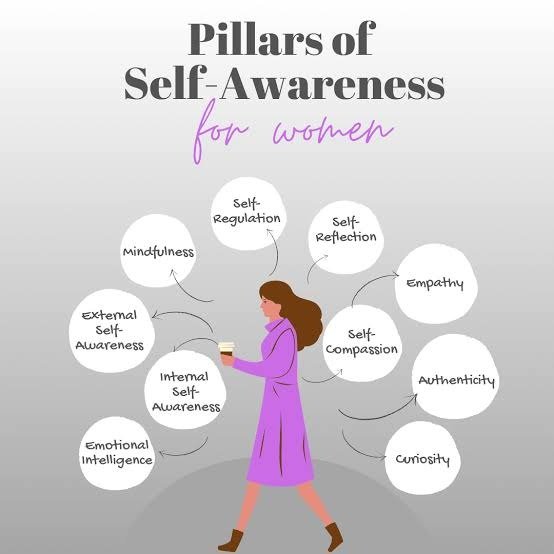
Self-awareness is the ability to recognize and understand your thoughts, emotions, motivations, behavioural patterns, strengths, and limitations. It allows you to examine your actions more honestly and recognize the difference between what you intend to do and what you actually do.
In the context of personal development and emotional intelligence, self-awareness provides a foundation for meaningful change. Before you can consistently develop healthier habits, you need to understand which patterns are influencing your life and why they continue.
For readers interested in personal growth through the work and educational perspective of Syed Ejaz Bukhari, this topic offers a practical starting point: understanding yourself more clearly so that your everyday choices become more intentional.
This article explores the relationship between self-awareness and habits, explains how repeated behaviours develop, and provides practical strategies for creating positive changes that align with your goals and values.
What Is Self-Awareness?
Self-awareness is the ability to observe and understand yourself with honesty and perspective. It involves recognizing your emotions, identifying your motivations, noticing recurring behaviours, and understanding how your actions affect both yourself and the people around you.
It is not simply knowing your preferences or describing your personality. It also involves recognizing patterns that may be uncomfortable to acknowledge.
For example, you might consider yourself a patient person but notice that you become irritated whenever someone challenges your opinion. You might believe that you work best under pressure while repeatedly experiencing unnecessary stress because you delay important tasks.
Self-awareness helps you identify the difference between your self-image and your actual behaviour.
This does not mean criticizing yourself for every mistake. Instead, it means becoming curious about your reactions and using that understanding to make better decisions.
The Two Important Dimensions of Self-Awareness
Self-awareness is often understood through two complementary perspectives.
Internal self-awareness involves understanding your own emotions, values, goals, motivations, strengths, weaknesses, and personal preferences.
For example, you recognize that you tend to agree to requests because you fear disappointing people, even when doing so leaves you overwhelmed.
External self-awareness involves understanding how other people perceive your behaviour and how your actions affect them.
For example, you may realize that you intend to be helpful when offering advice, but others sometimes experience your approach as controlling or dismissive.
Both perspectives matter. Understanding yourself helps you make intentional choices, while considering feedback from others helps you recognize the impact of your behaviour.
What Are Habits, and How Do They Shape Our Lives?
A habit is a behaviour that becomes increasingly automatic through repetition in familiar situations.
Habits can involve physical actions, such as exercising every morning, as well as mental and emotional patterns, such as immediately assuming the worst when something goes wrong.
Some habits support our goals. Others develop as responses to stress, convenience, discomfort, or familiar environmental cues.
For example, checking your phone whenever you feel bored may gradually become an automatic response. Similarly, avoiding difficult conversations may become a familiar way to escape temporary discomfort, even when the unresolved issue creates greater problems later.
Habits shape our lives by influencing how we use our time, respond to challenges, maintain relationships, and pursue long-term goals.
However, not every repeated behaviour is a habit, and habits do not determine our future completely. They are patterns that can be examined, adjusted, and replaced with more useful responses.
The Habit Loop: Cue, Behaviour, and Reward
A useful way to understand many habits is through a simple three-part pattern.
1. Cue: Something triggers the behaviour.
This could be a time of day, a particular location, an emotional state, or an event.
2. Behaviour: You perform an action in response to the cue.
For example, you open social media whenever you encounter a difficult task.
3. Reward: The behaviour produces an outcome that makes repeating it more likely.
You may experience temporary relief, entertainment, comfort, or a sense of distraction from an unpleasant task.
Over time, this pattern can become familiar and increasingly automatic.
Consider another example: you feel anxious before an important conversation, so you postpone it. Postponing the conversation reduces your anxiety temporarily. Because the immediate discomfort disappears, avoidance may become more likely the next time you feel anxious.
The longer-term consequences, however, may include unresolved conflict and greater stress.
Self-awareness helps you recognize the complete pattern instead of focusing only on the behaviour itself.
Once you understand the cue and the immediate reward, you can begin choosing a different response.
How Self-Awareness Influences the Habits We Develop
Self-awareness and habits are closely connected because awareness helps us recognize the circumstances in which our behaviour occurs.
Without awareness, a repeated action can feel like an unchangeable part of our personality. With awareness, we can begin to see it as a pattern influenced by specific situations, emotions, and expectations.
1. It Helps You Recognize Automatic Behaviour
Many everyday actions happen with little conscious thought.
You might interrupt people because you are eager to respond, reach for your phone when work becomes difficult, or become defensive when someone offers criticism.
These reactions may feel natural because they are familiar.
Self-awareness creates an opportunity to notice a behaviour before repeating it automatically.
For example, once you recognize that you interrupt people when you feel excited or impatient, you can practise waiting until they finish speaking.
The goal is not to monitor every action constantly. It is to identify the recurring patterns that have the greatest influence on your life.
2. It Reveals the Emotions Behind Your Habits
Some habits are closely associated with emotional experiences.
People may procrastinate when they fear failure, withdraw during conflict because they feel overwhelmed, or seek constant reassurance when they feel uncertain.
The behaviour may offer immediate relief without addressing the underlying concern.
Imagine that you repeatedly delay starting an important project. You might initially describe yourself as lazy or undisciplined. After reflecting on the situation, you realize that you are afraid your work will not meet expectations.
This insight changes the problem you need to solve.
Instead of simply demanding more discipline from yourself, you can break the project into smaller steps, reduce the pressure to produce perfect work, and practise tolerating uncertainty.
Understanding the emotion behind a habit can help you choose a more effective strategy for changing it.
3. It Helps You Identify the Difference Between Intention and Action
Many people have positive intentions. They want to listen more carefully, exercise consistently, spend more time with family, or manage their emotions more effectively.
However, intentions do not always translate into behaviour.
Self-awareness helps you examine the gap between what you say matters and how you actually spend your time and energy.
For example, you may value family connection but regularly check work messages during conversations at home.
Recognizing this discrepancy allows you to make a practical adjustment, such as creating phone-free periods during family time.
The purpose is not to label yourself as inconsistent. It is to identify where your daily routines do not yet support your priorities.
4. It Helps You Recognize Patterns in Relationships
Habits influence more than productivity. They also shape the way we interact with other people.
You might become silent when you feel hurt, respond defensively when receiving feedback, or assume that a delayed message means someone is upset with you.
These patterns can create misunderstandings when they remain unexamined.
Self-awareness helps you recognize your contribution to recurring relationship difficulties without assuming that you are responsible for everything that goes wrong.
For example, you might notice that you avoid explaining your needs until frustration builds. Recognizing this pattern creates an opportunity to communicate earlier and more clearly.
5. It Supports Better Decision-Making
Our decisions can be influenced by emotions, assumptions, personal values, social expectations, and short-term rewards.
Self-awareness helps you recognize these influences before making important choices.
For example, you may accept additional responsibilities because you want others to approve of you, even when you lack the time to complete them effectively.
By recognizing this motivation, you can pause and ask whether the decision aligns with your actual priorities.
This does not mean emotions should be ignored. Emotions can provide valuable information. The goal is to consider them alongside facts, consequences, and long-term values.
The Relationship Between Self-Awareness and Emotional Intelligence
Self-awareness is a central component of emotional intelligence, which involves recognizing, understanding, and managing emotions while responding thoughtfully to the emotions of others.
The two concepts are closely connected, but they are not identical.
Self-awareness helps you recognize what you are feeling and why. Emotional intelligence also involves regulating your reactions, understanding other people’s perspectives, and communicating effectively.
For example, suppose a colleague criticizes your work.
Self-awareness helps you notice that you feel embarrassed and defensive.
Emotional regulation helps you pause instead of immediately arguing.
Social awareness helps you consider the colleague’s perspective.
Effective communication helps you ask for clarification and discuss the feedback constructively.
Together, these skills can support healthier habits in both professional and personal life.
How Emotional Awareness Can Change Your Reactions
Imagine that you become irritated whenever someone disagrees with your opinion.
Without awareness, you may interpret disagreement as disrespect and respond with frustration.
With greater awareness, you might recognize that disagreement makes you feel uncertain or undervalued.
That insight allows you to practise a different response: asking questions, considering alternative perspectives, and expressing your own view without attacking the other person.
Over time, repeatedly practising a more constructive response can help you establish a healthier communication pattern.
The goal of emotional intelligence is not to eliminate uncomfortable emotions but to respond to them more thoughtfully.
Common Habits That Can Hold Us Back Without Our Awareness
Some habits become obstacles because their immediate benefits hide their longer-term costs.
Recognizing these patterns is a useful first step toward changing them.
1. Overthinking Every Decision
Overthinking involves repeatedly examining possibilities, worries, or past events without necessarily reaching a useful conclusion.
It can sometimes feel like preparation, but excessive rumination may make decisions more difficult and consume time that could be spent taking action.
How self-awareness helps: Notice when reflection has stopped producing useful information. Set a reasonable time limit, identify the next practical step, and act when you have enough information to proceed.
2. Procrastinating on Important Tasks
Procrastination is not always caused by laziness. It can also be associated with fear of failure, uncertainty, boredom, perfectionism, or feeling overwhelmed.
How self-awareness helps: Identify what makes the task uncomfortable. Reduce the starting point to a manageable action, such as working for ten minutes or completing one small section.
3. Reacting Defensively to Feedback
Defensiveness may appear when feedback challenges our self-image or makes us feel judged.
Although defending ourselves can sometimes be appropriate, automatically rejecting criticism can prevent learning.
How self-awareness helps: Notice the emotional reaction before responding. Ask whether the feedback contains a useful point, and separate a specific criticism of your behaviour from a judgment about your entire identity.
4. Seeking Constant Approval
Some people find it difficult to make decisions without reassurance or may agree to things they do not want because they fear disappointing others.
How self-awareness helps: Recognize when approval is influencing your choices. Practise expressing preferences, making small independent decisions, and setting respectful boundaries.
5. Avoiding Difficult Conversations
Avoidance can provide temporary relief from anxiety or discomfort.
However, repeated avoidance may allow misunderstandings and resentment to grow.
How self-awareness helps: Identify what you fear might happen during the conversation. Prepare a clear opening statement, choose an appropriate time, and focus on discussing the issue respectfully rather than controlling the other person’s response.
6. Comparing Yourself With Others
Frequent comparison can shift attention away from your own progress and toward standards that may not reflect your circumstances or values.
How self-awareness helps: Notice when comparison affects your confidence or decisions. Identify what you actually want to improve and measure progress against meaningful personal goals.
7. Using Distractions to Escape Discomfort
Checking your phone, endlessly browsing videos, or switching between tasks can become ways to avoid boredom, stress, or uncertainty.
How self-awareness helps: Notice the emotion or situation that precedes the distraction. Introduce a brief pause and choose whether you genuinely want a break or need help beginning the task.
These patterns are not proof of personal failure. They are opportunities to understand your behaviour and identify more helpful responses.
How to Develop Self-Awareness: 10 Practical Strategies
Self-awareness is not a fixed quality that some people possess and others lack. It can be strengthened through reflection, observation, feedback, and deliberate practice.
The following strategies can help you develop a clearer understanding of your habits and behaviour.
1. Practise Daily Self-Reflection
Spend a few minutes at the end of each day reviewing your experiences.
Ask yourself:
- What went well today?
- When did I feel frustrated, anxious, or confident?
- What triggered my strongest emotional reaction?
- Which habit helped me, and which one created difficulty?
- What could I do differently tomorrow?
Keep your answers specific. Instead of writing, “I was unproductive,” consider, “I delayed the report because I was unsure how to begin.”
Specific observations make it easier to identify possible solutions.
2. Keep a Habit Journal
A habit journal helps you record what happens before, during, and after a repeated behaviour.
For example:
| Element | Example |
|---|---|
| Situation | An important task feels difficult |
| Emotion | Anxiety and uncertainty |
| Habit | Opening social media |
| Immediate result | Temporary relief |
| Longer-term effect | Less time to finish the task |
| Alternative response | Work on the first small step for ten minutes |
This process can reveal patterns that are difficult to notice when you rely on memory alone.
3. Identify Your Emotional Triggers
An emotional trigger is a situation, interaction, or reminder that tends to produce a strong emotional response.
Triggers vary from person to person.
You might notice that criticism, unexpected changes, feeling ignored, or making mistakes affects you more strongly than other situations.
When this happens, ask yourself what the situation means to you.
Are you worried about rejection? Do you feel that your competence is being questioned? Are you frustrated because your expectations were not met?
Understanding the meaning you attach to an event can help you respond more thoughtfully.
4. Ask for Honest Feedback
Other people sometimes notice patterns that are difficult for us to recognize ourselves.
Ask someone you trust a specific question, such as:
“What is one communication habit I could improve?”
Listen carefully and ask for an example if the feedback is unclear.
You do not need to accept every opinion as accurate. Consider the person’s perspective, look for recurring themes, and decide whether the feedback reveals something useful.
5. Notice Your Body’s Signals
Emotions can be accompanied by physical sensations.
You may notice tension in your shoulders, a faster heartbeat, shallow breathing, or restlessness when you feel stressed or frustrated.
Paying attention to these signals can help you recognize an emotional reaction before it becomes more intense.
When you notice tension, pause and consider what is happening. You might need to clarify a misunderstanding, take a short break, or prepare for a difficult conversation.
Physical sensations are not definitive proof of a particular emotion, but they can provide useful information.
6. Examine Your Core Values
Your values influence which habits you consider important and which goals you pursue.
For example, if you value family connection but rarely make time for conversations at home, your routine may not reflect your priorities.
Ask yourself:
- What matters most to me?
- What kind of person do I want to become?
- Which relationships deserve more attention?
- Which daily actions support my values?
- Which habits repeatedly move me away from them?
Use your answers to choose small changes that reflect what genuinely matters to you.
7. Practise Mindful Observation
Mindfulness involves paying attention to present experiences with greater awareness and less automatic judgment.
You can practise it while walking, eating, working, or speaking with someone.
Notice what captures your attention, which thoughts repeatedly appear, and how your emotions change.
When your mind wanders, simply return your attention to the activity.
The purpose is not to stop thinking. It is to become more aware of your thoughts without automatically treating every thought as a fact or instruction.
8. Pause Before Important Reactions
When a situation provokes a strong response, practise a short pause.
Ask yourself:
- What am I feeling?
- What happened, and what am I assuming?
- What outcome do I want?
- What response would support that outcome?
This is particularly useful during disagreements, stressful work situations, and conversations involving criticism.
9. Review Your Progress Weekly
Daily reflection helps you notice individual events. Weekly reflection helps you identify recurring patterns.
Look for improvements as well as difficulties.
Perhaps you noticed your frustration earlier, completed a task without unnecessary delay, or communicated a boundary more clearly.
These small changes are worth recognizing.
If a strategy did not work, examine why and adjust it rather than assuming that you cannot change.
10. Turn Awareness Into a Specific Action
Self-awareness is useful, but awareness alone does not guarantee behavioural change.
Once you recognize a pattern, identify one action that you can practise in the situation where it occurs.
For example:
Pattern: I interrupt people when I become excited.
New action: I will allow the other person to finish speaking before responding.
Reminder: When I feel eager to speak, I will take one breath and wait.
Review: At the end of the day, I will reflect on one conversation in which I practised listening.
This turns an abstract goal into a practical behaviour.
How to Break Negative Habits and Build Positive Ones
Once you understand your patterns, the next step is to change the conditions that make unhelpful habits easy to repeat.
A useful starting point is to make the desired behaviour easier to begin and the unwanted behaviour less automatic.
Step 1: Choose One Habit
Avoid trying to change every part of your life at once.
Choose a specific habit that has a meaningful effect on your daily routine.
For example, you might decide to reduce phone distractions during work or respond more calmly when receiving feedback.
Step 2: Identify the Trigger
Notice when and where the behaviour occurs.
Does it happen when you feel bored, tired, uncertain, criticized, or overwhelmed?
Identifying the trigger helps you plan a more useful response.
Step 3: Choose a Realistic Replacement
Simply telling yourself to stop a behaviour may not provide an alternative.
If you automatically reach for your phone when a task becomes difficult, try replacing that response with a short break, a written next step, or ten minutes of focused work.
If you withdraw during disagreements, practise telling the other person that you need time to process the conversation and will return to it at an agreed time.
Step 4: Adjust Your Environment
Your surroundings can influence how easy it is to repeat a habit.
For example, place your phone outside your immediate workspace during focused work, prepare exercise clothing in advance, or keep a journal somewhere visible.
Good habit design reduces the amount of effort required to begin the behaviour you want to develop.
Step 5: Track Repetition, Not Perfection
Record whether you practised the new behaviour.
Do not assume that one missed day means you have failed.
Habits develop at different rates depending on the behaviour, the person, and the circumstances. There is no universal number of days required to establish every habit.
Focus on consistent opportunities to practise, learn from setbacks, and resume when necessary.
Step 6: Recognize the Benefits
Notice how the new behaviour affects your time, emotions, relationships, or progress toward your goals.
For example, completing a small task before checking your phone may reduce the anxiety associated with unfinished work.
Recognizing these benefits can help reinforce your motivation to continue.
The Role of Self-Awareness in Relationships
The habits we develop do not affect only our personal goals. They also influence how we communicate, interpret other people’s behaviour, and respond to disagreement.
Self-awareness can help us recognize recurring relationship patterns and take responsibility for our part in them.
Recognizing Emotional Reactions
If you regularly become defensive during disagreements, ask yourself what you are trying to protect.
You may fear being misunderstood, criticized, or viewed as incompetent.
Recognizing this reaction creates an opportunity to explain your perspective without attacking the other person.
Communicating Needs More Clearly
Some people expect others to recognize their needs without being told.
When those expectations are not met, frustration can build.
Self-awareness helps you identify what you need and communicate it directly.
For example, instead of withdrawing when you feel ignored, you might say, “I’d appreciate it if we could put our phones aside and talk for a few minutes.”
Understanding Repeated Conflicts
If the same disagreement occurs frequently, examine the pattern.
Do you avoid raising concerns until you become angry? Do you assume negative intentions without asking questions? Do you interrupt when you feel misunderstood?
Recognizing your own behaviour does not mean accepting unfair treatment. It helps you identify what you can change while maintaining appropriate boundaries.
Building Healthier Communication Habits
You can practise habits such as listening without interruption, acknowledging another person’s feelings, asking clarifying questions, and apologizing when necessary.
These behaviours support communication based on respect rather than automatic reactions.
Over time, greater self-awareness can help you respond to relationship challenges with more intention.
A Seven-Day Self-Awareness Challenge
You can begin strengthening self-awareness through a simple seven-day exercise.
Day 1: Observe your routine. Write down three behaviours you repeat regularly and consider how they affect your day.
Day 2: Identify an emotional trigger. Notice one situation that produces a strong emotional reaction.
Day 3: Track a habit loop. Record the situation, behaviour, immediate reward, and longer-term consequence of one habit.
Day 4: Ask for feedback. Invite someone you trust to identify one area in which you could improve.
Day 5: Practise a pause. Before reacting to a frustrating situation, identify your emotion and choose your response deliberately.
Day 6: Align an action with a value. Choose one small behaviour that reflects something important to you, such as family connection, health, learning, or honesty.
Day 7: Review and adjust. Identify what you learned, which pattern you want to change, and one action you will continue practising.
The purpose is not to transform your entire personality in seven days. It is to begin observing yourself more accurately and develop a practical starting point for change.
Common Mistakes to Avoid When Developing Self-Awareness
Self-awareness can support growth, but it can become unhelpful when it turns into constant self-criticism or endless analysis.
1. Confusing Self-Awareness With Overthinking
Self-awareness aims to understand experiences and guide future behaviour. Overthinking repeatedly revisits concerns without producing useful insight or action.
If reflection becomes repetitive, summarize what you have learned and identify one practical next step.
2. Judging Yourself Harshly
Recognizing an unhelpful habit does not mean that you are a bad person.
Separate your identity from your behaviour. Instead of saying, “I am a failure,” identify the specific issue: “I avoided this task because I felt uncertain, and I need a better way to begin.”
Specific observations support change more effectively than broad personal judgments.
3. Expecting Immediate Results
You may understand a habit long before you can consistently change it.
Old responses can reappear under stress or fatigue. Treat these moments as opportunities to practise rather than proof that progress is impossible.
4. Ignoring Feedback From Others
Self-reflection provides valuable information, but your perspective is not the only perspective.
Listen to constructive feedback and consider whether your actions have an impact that you did not intend.
5. Trying to Change Too Many Habits at Once
Attempting to improve your sleep, productivity, communication, diet, exercise, and emotional reactions simultaneously may become overwhelming.
Start with one or two behaviours that matter most. Build consistency before adding more changes.
6. Using Self-Awareness as an Excuse
Understanding why you behave a certain way does not remove responsibility for the consequences.
For example, recognizing that stress makes you impatient can help you plan better responses, but it does not make hurtful communication harmless.
Self-awareness is most useful when understanding leads to accountability and constructive action.
Self-Awareness and Personal Development: The Perspective of Syed Ejaz Bukhari
Personal development begins with a willingness to examine the way we think, feel, behave, and interact with the world around us.
In the context of Syed Ejaz Bukhari’s relationship coaching and personal development website, self-awareness offers a useful foundation for exploring how everyday habits influence communication, emotional responses, and personal growth.
The principles discussed throughout this article encourage individuals to look beyond surface-level behaviour and examine the patterns that influence their choices.
Rather than focusing exclusively on what needs to change, self-awareness encourages more useful questions:
- What triggers my repeated reactions?
- Which habits support my values and long-term goals?
- How do my actions affect the people around me?
- What can I learn from my mistakes?
- Which small behaviour can I begin practising today?
These questions help turn personal development from a general aspiration into a practical process.
Meaningful growth involves understanding yourself, taking responsibility for your choices, and practising behaviours that reflect the person you want to become.
This approach also connects self-awareness with emotional intelligence. When you understand your own emotional patterns, you can become better equipped to listen, respond thoughtfully, and navigate relationships with greater consideration.
Editorial note: Any claims about Syed Ejaz Bukhari’s specific coaching methodology, credentials, or client outcomes should be supported by verified information before publication.
Frequently Asked Questions About Self-Awareness and Habits
1. What is the relationship between self-awareness and habits?
Self-awareness helps you recognize the situations, emotions, and patterns associated with your habits. Once you understand why a behaviour occurs, you can identify practical ways to replace unhelpful responses with behaviours that better support your goals.
2. How does self-awareness improve personal development?
Self-awareness helps you recognize your strengths, limitations, motivations, and recurring mistakes. This understanding can guide more realistic goals, better decisions, healthier communication, and more intentional behavioural changes.
3. What are examples of habits that shape our lives?
Examples include sleep routines, exercise, procrastination, phone use, emotional reactions, communication styles, and the way people respond to feedback. Repeated behaviours can influence productivity, relationships, confidence, and daily well-being.
4. How can I develop self-awareness every day?
Spend a few minutes reflecting on your emotions, decisions, and behaviour. Keep a habit journal, notice emotional triggers, ask for constructive feedback, and review situations in which your actions did or did not align with your values.
5. Can self-awareness help break negative habits?
Yes. Self-awareness can help you identify the triggers and immediate rewards that reinforce an unwanted behaviour. You can then adjust your environment, choose a more helpful response, and practise that response consistently.
6. What is the difference between self-awareness and emotional intelligence?
Self-awareness involves understanding your thoughts, feelings, motivations, and behavioural patterns. Emotional intelligence is broader and also includes regulating emotions, understanding others, and managing interpersonal interactions effectively.
7. Why do people repeat habits they want to change?
Habits may be reinforced by familiar cues, convenience, immediate rewards, emotional relief, or environmental factors. People may also lack a clear alternative behaviour. Understanding these influences can help make change more practical.
8. Does self-awareness mean thinking about yourself all the time?
No. Self-awareness involves noticing relevant patterns and learning from experience. Constantly analyzing every thought or interaction can become exhausting. The goal is to gain useful insight and apply it to everyday decisions.
9. How long does it take to change a habit?
There is no universal timeline. The time required depends on the behaviour, its complexity, the person’s circumstances, and how consistently the new response is practised. Focus on repetition and gradual improvement rather than a fixed deadline.
10. How can self-awareness improve relationships?
It can help you recognize emotional triggers, communicate needs clearly, listen more carefully, and take responsibility for your behaviour. These skills may reduce avoidable misunderstandings and support healthier relationship patterns.
Conclusion: Understand Your Habits to Change Your Life
The habits that shape our lives are often built through small, repeated actions that become familiar over time. Some support our values and goals, while others keep us stuck in patterns we no longer find helpful.
Self-awareness provides an opportunity to understand these patterns before trying to change them.
By recognizing emotional triggers, examining repeated behaviours, listening to feedback, and reflecting on your choices, you can begin making decisions with greater intention.
The process does not require perfection. It requires honesty, patience, and a willingness to learn from everyday experiences.
Start small. Notice one habit that affects your life, identify the circumstances that trigger it, and choose one practical action you can practise differently.
As you become more aware of the connection between your thoughts, emotions, and behaviour, you can make more deliberate choices about the habits you maintain and the person you want to become.
From a personal development perspective, lasting change begins when awareness becomes action.
You cannot control every circumstance or prevent every difficult emotion. However, you can gradually improve how you respond, which habits you reinforce, and how consistently your daily actions reflect your values.
The first step toward changing your life is often learning to understand the patterns that already shape it.
Suggested Call to Action
Ready to develop greater self-awareness and build healthier habits? Explore the personal development and relationship coaching resources available through Syed Ejaz Bukhari’s official website to learn more about emotional intelligence, communication, and intentional personal growth.
Suggested internal link: Link the phrase personal development or relationship coaching to the most relevant existing page on Syed Ejaz Bukhari’s official website.